You walk across the living room without a single twinge of discomfort. However, the moment you reach the top of a staircase and take that first step down, a sharp ache erupts right behind your kneecap. If you constantly wonder, why do my knees hurt going downstairs, you are definitely not alone in this frustrating experience. Because descending stairs forces your joints to act as heavy shock absorbers, it places massive stress on your cartilage. That’s why simply walking down a short flight of steps feels much worse than climbing up them. Instead of permanently avoiding two-story buildings, you absolutely need to address the underlying mechanics of your joints. Making a few specific physical adjustments drastically reduces this daily joint loading and keeps your knees perfectly comfortable.
Quick Guide to Staircase Joint Pain
| Mechanical Trigger | What Happens Inside | Simple Daily Fix |
| Weak Quadriceps | Kneecap tracks completely out of its groove | Perform static wall sits |
| Tight Calf Muscles | Forces knee to absorb extra heavy shock | Stretch calves against a wall |
| Heavy Heel Striking | Sends hard vibrations directly into joint | Land softly on your forefoot |
| Stiff Ankle Joints | Limits natural biological shock absorption | Do daily ankle circle rotations |
Key Takeaways
- Descending stairs multiplies your body weight across your knee joint by up to five times.
- Weak front thigh muscles cause your kneecap to physically grind against the bone underneath it.
- Changing exactly how your foot strikes the stair drastically reduces sudden joint impact.
- Supplying your joints with specific nutrients actively thickens your protective synovial fluid.
The Mechanics Behind Why Do My Knees Hurt Going Downstairs
When you walk down a flight of stairs, gravity and momentum combine to create massive physical force. Because you are lowering your entire body weight onto a single bent leg, the pressure multiplies intensely. According to mechanical joint guidance from Harvard Health, descending stairs places up to five times your normal body weight directly onto your kneecap. So, if you weigh 150 pounds, your joint actively absorbs 750 pounds of pressure with every single downward step.
Meanwhile, your patella (kneecap) must glide smoothly inside a small bony groove as your leg bends. If your quadriceps are slightly weak or tight, they pull the kneecap slightly off center. Consequently, the hard bone grinds directly against your sensitive cartilage instead of gliding smoothly on top of it. To break this painful cycle, you must focus on the three pillars of joint stability:
- Alignment: Keeping the kneecap strictly centered in its natural groove.
- Absorption: Using your calf muscles to take the initial physical shock.
- Lubrication: Providing thick fluid to heavily reduce bone friction.
While fixing your step mechanics removes the immediate physical stress, your overworked cartilage often needs targeted internal nourishment to fully recover. Many people actively protect their joint mobility by taking a specialized synovial support formula every single morning. This specific natural habit gently delivers powerful hydration straight to your joint capsule, helping your knees resist heavy friction all day long.
7 Simple Fixes for Why Do My Knees Hurt Going Downstairs
1. Land on Your Forefoot Instead of Your Heel
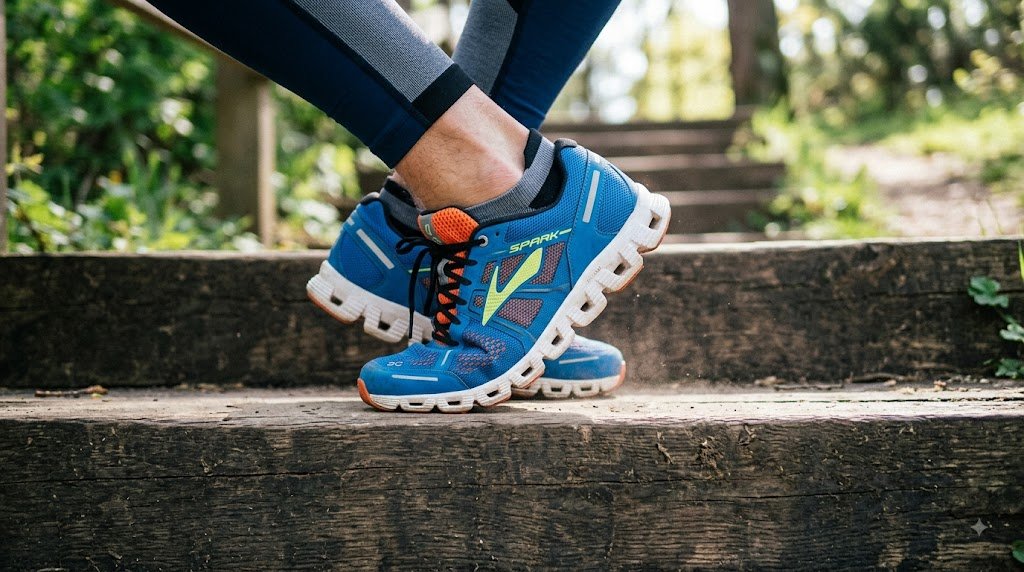
Most people blindly drop their heel onto the next step when walking downstairs. However, striking with your hard heel sends a massive shockwave directly up your shin bone and straight into your knee. Instead, point your toes down slightly and let the ball of your foot hit the step first. Because your calf muscle acts as a natural spring, landing on your forefoot absorbs the impact beautifully. Consequently, your kneecap experiences a tiny fraction of the daily pounding.
2. Strengthen Your Inner Quadriceps Muscle
Your vastus medialis obliquus (VMO) is the teardrop-shaped muscle on the inner part of your lower thigh. Because this specific muscle holds your kneecap perfectly centered, weakness here causes immediate grinding on stairs. To strengthen it, sit against a wall with your knees bent at a shallow 45-degree angle. Hold this static position for exactly 30 seconds every single morning. Therefore, your kneecap stays firmly in its protective groove when you descend steps.
3. Stretch Your Calves Before Tackling Long Stairs
Tight calves severely limit how far your ankle can actually bend. When your ankle refuses to bend, your knee must absorb all the excess downward force. Stand facing a wall, place one foot back, and press your back heel firmly into the floor for 30 seconds. By actively increasing your ankle mobility, you completely remove unnecessary physical strain from your knee joint. That’s why a quick stretch makes walking down to the basement feel significantly easier.
Because daily wear and tear actively depletes the slippery fluid inside your joints, friction naturally increases as you get older. Adding a daily joint-support blend replenishes your natural stores of crucial hyaluronan molecules perfectly. Therefore, your knees gain an invisible, internal cushion that actively absorbs harsh impact before it ever triggers painful inflammation.
4. Engage Your Glutes Before Lowering Your Body
Your glutes act as the primary brakes for your entire lower body. If your glutes are completely relaxed from sitting in an office chair all day, your knees have to do all the braking. Before taking a step down, consciously squeeze the glute muscle of your standing leg. This simple mental cue forces your strong hip muscles to strictly control your descent. On top of that, it drastically reduces the pulling sensation on your patellar tendon.
5. Take the Steps Sideways During Flare-Ups
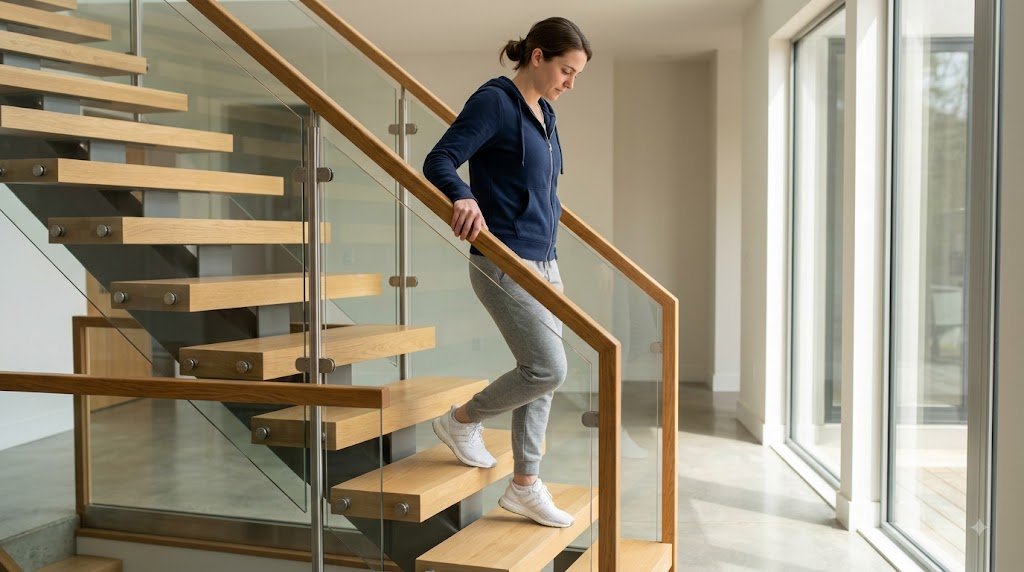
When your cartilage feels deeply inflamed, standard forward stepping only irritates the joint further. Instead of pushing through the sharp pain, turn your body completely sideways so you face the handrail. Step down sideways, bringing both feet to the exact same step before continuing. Because this angle shifts the physical load to the side of your leg, it takes the pressure entirely off your front kneecap.
6. Eat Omega-3s to Thicken Joint Fluid
Your body naturally produces synovial fluid to lubricate your moving bones safely. However, high systemic inflammation makes this fluid thin and completely ineffective. Add exactly two tablespoons of raw chia seeds to your morning yogurt. This specific serving delivers 5 grams of anti-inflammatory omega-3 fatty acids and 140 calories. Consequently, your body uses these healthy fats to manufacture thick, highly protective joint fluid.
7. Wear Shoes With a Zero-Drop Sole
Traditional running shoes heavily elevate your heel above your toes. Because this angled position tilts your entire body forward, it throws extra weight directly onto your knees during a descent. Swap your standard sneakers for a flat shoe where the heel and toe sit evenly on the ground. This small footwear adjustment shifts your center of gravity backward slightly. Therefore, your strong glutes handle the stairs instead of your fragile kneecaps.
When your knees feel stiff and heavily strained every single afternoon, superficial ice packs only offer temporary, fleeting relief. Instead, providing your skeletal system with deep, systemic nourishment targets the actual root cause of joint exhaustion. This targeted daily formula gently repairs age-related cartilage damage, ensuring your joints stay supple, pain-free, and highly mobile through your longest, hardest days.
Frequently Asked Questions About Staircase Knee Pain
Is it safe to continue using stairs if my knees ache?
Yes, completely avoiding stairs often causes your leg muscles to become even weaker over time. When your quadriceps lose their physical mass, the joint grinding actually gets much worse. However, you should never push through sharp, stabbing pain. Instead, practice the sideways stepping method while actively working on your daily leg strengthening exercises.
Does a knee brace help with descending stairs?
A standard compression sleeve definitely helps by increasing local blood flow and keeping the joint warm. Furthermore, a specialized patellar tracking brace physically holds your kneecap directly in the center of its groove. Because it stops the bone from shifting sideways, it drastically reduces the sharp catching sensation you feel when lowering your body.
Why do my knees pop and crack on the stairs?
That alarming popping sound, called crepitus, is usually entirely harmless if it happens without any sharp pain. It occurs when tiny gas bubbles inside your joint fluid suddenly burst under physical pressure. However, if the cracking directly accompanies a stabbing ache, it means your roughened cartilage is actively grinding against bare bone.
Can losing weight actually stop my knee pain?
Absolutely, because gravity fiercely multiplies your physical weight on a staircase. Losing just 10 pounds effectively removes 50 pounds of pressure from your kneecaps with every single downward step. Therefore, shedding a small amount of body fat creates a massive, highly noticeable improvement in your daily physical comfort and mobility.
Step Down With Total Confidence
Protecting your joints does not require you to move into a single-story house or abandon your daily walks. Instead, you simply need to respect the mechanical limits of your physical body. Pick just two of these practical habits to implement tomorrow morning. Start by landing on the ball of your foot and adding a static wall sit to your routine. When you proactively manage your joint stress, you will finally stop asking why do my knees hurt going downstairs and start moving with complete confidence again.
Pin this for later!
This article is for informational purposes only and isn’t a substitute for professional medical advice.
