You stare at your monitor all morning without any noticeable issues. However, by the late afternoon, your vision gets blurry and your eyelids feel incredibly heavy. If you constantly wonder, why do my eyes feel tired by 4pm, you are definitely not alone. Because your visual system works just like any other muscle group, it eventually runs completely out of stamina. That’s why pushing through the afternoon without taking deliberate screen breaks always causes intense ocular fatigue. Instead of relying on a third cup of coffee to force your eyes open, you absolutely need to address the actual physical strain. Making a few simple, targeted adjustments instantly refreshes your vision and keeps your focus remarkably sharp until you finally log off.
Quick Guide to Afternoon Screen Fatigue
| Daily Trigger | Visual Impact | Instant Fix |
| Uninterrupted Screen Time | Exhausts the ciliary focusing muscle | Look 20 feet away every 20 minutes |
| Decreased Blink Rate | Evaporates the protective tear film | Perform 10 hard blinks every hour |
| Overhead Glare | Forces your eyes to squint constantly | Tilt the monitor down slightly |
| Air Conditioning | Dries out the delicate cornea surface | Direct air vents away from your face |
Key Takeaways
- Your eyes physically tire out from holding a single fixed focal distance for several hours.
- Your natural blinking rate drops by half when you stare intensely at digital devices.
- Small environmental lighting changes significantly reduce your daily visual processing strain.
- Feeding your ocular system specific antioxidants actively builds natural fatigue resistance.
The Biology Behind Why Do My Eyes Feel Tired by 4pm
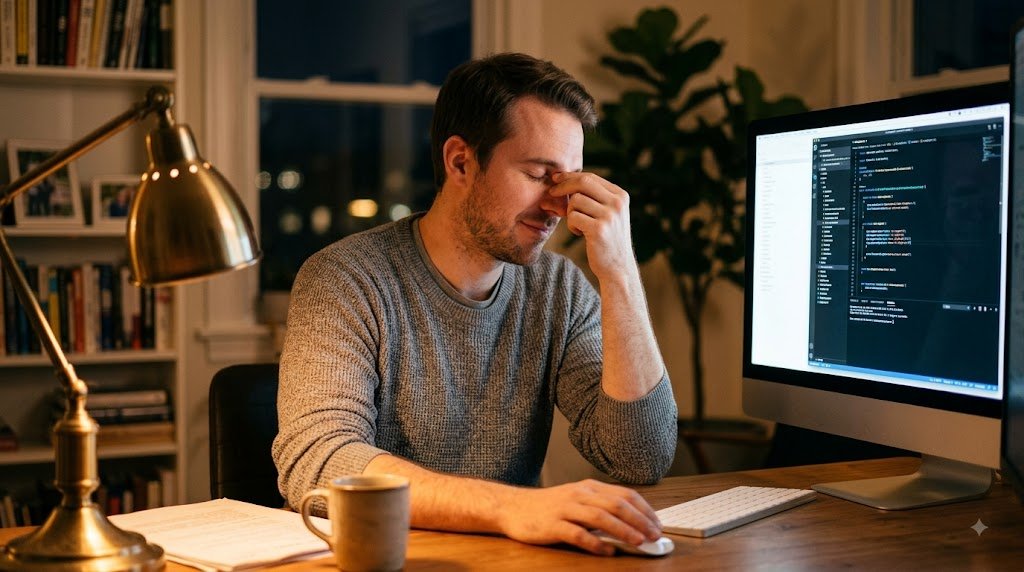
When you look at a glowing screen two feet away, tiny ciliary muscles inside your eye must contract tightly. Because they stay locked in this exact position for hours on end, they slowly start to cramp. Meanwhile, staring at digital devices drastically reduces your natural biological blink rate. As a result, your protective tear film evaporates rapidly into the surrounding office air. So, your cornea dries out completely, leading to a gritty, burning sensation that peaks in the late afternoon.
On top of that, your visual cortex has to work extra hard to process pixelated text and harsh screen glare. Therefore, your brain simply gets tired of interpreting stressful visual signals. Combining muscle cramps, dry corneas, and mental fatigue perfectly explains the afternoon crash.
While fixing your workstation removes the immediate physical stress, your overworked optic nerves often need targeted internal support to fully recover. Many people actively protect their visual clarity by taking a specialized botanical formula every single morning. This specific natural habit gently delivers powerful antioxidants straight to your macula, helping your eyes resist digital strain all day long.
How to Stop Asking Why Do My Eyes Feel Tired by 4pm
Relieve Deep Muscle Tension With the 20-20-20 Technique
Holding your focus on a close object forces your eye muscles to remain rigidly flexed. Instead of letting them cramp, you must deliberately break that intense focal lock. Implement the 20-20-20 rule during your longest work blocks. Every 20 minutes, look at an object at least 20 feet away for exactly 20 seconds. This brief pause actively forces the ciliary muscle to relax and reset completely. Consequently, your eyes regain their natural stamina for the next work block.
Could Your Monitor Height Be Causing Dry Corneas?
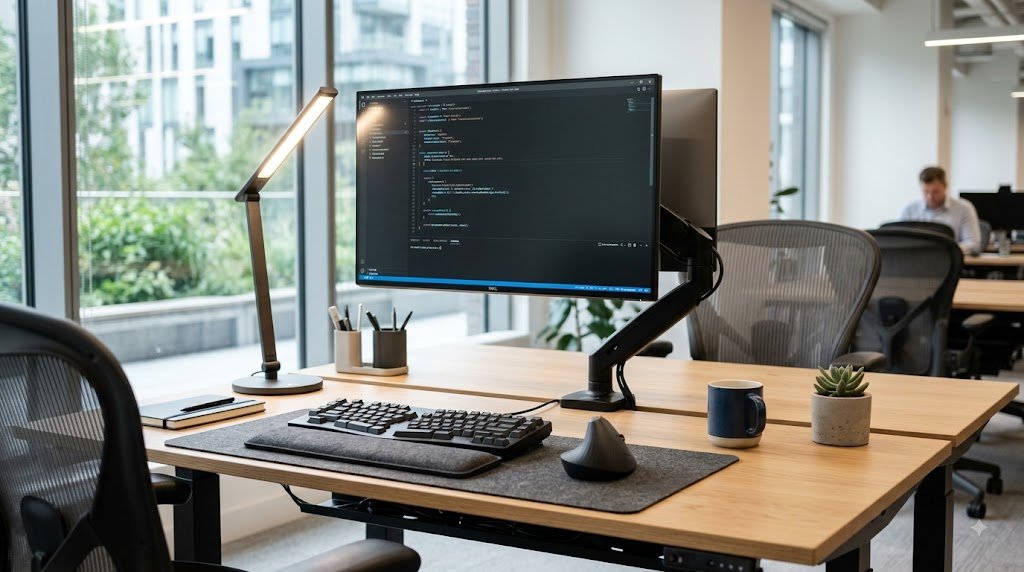
The physical position of your computer screen directly impacts how much of your eye is exposed to the air. If your monitor sits too high, you must open your eyelids extremely wide to see the top. As a result, your tear film evaporates at double the normal speed. Simply lower your screen so the top edge sits slightly below your natural eye level. Because you are looking slightly downward, your eyelids naturally cover and protect more of your delicate cornea.
Because modern screens constantly bombard your retinas with artificial blue light, your natural defenses deplete rapidly by the afternoon. Adding a daily vision-support blend replenishes your natural stores of crucial ocular nutrients perfectly. Therefore, your eyes gain an invisible, internal shield that actively filters out harsh screen glare before it ever causes fatigue.
Hydrate Your Eyes With Intentional Blinking Routines
Your tears provide a smooth, clear optical surface for your eyes to look through. However, digital concentration stops your brain from sending the signal to blink regularly. To combat this severe dryness, you must train yourself to blink with clear intention. Close your eyes tightly for two seconds, then open them wide. Repeat this hard blinking motion exactly 10 times at the start of every hour. This simple mechanical action physically forces fresh tears from your glands across your dry eyes.
Block Overhead Glare Using Proper Lighting Angles
Harsh lighting creates intense reflections on your screen that force your visual system to work overtime. Because your eyes constantly try to look past the glare, they fatigue incredibly fast. Therefore, you should never sit with a bright, uncovered window directly behind your monitor. Instead, position your desk so windows are located directly to your left or right side. Furthermore, tilt your monitor downward by roughly 15 degrees to deflect overhead fluorescent lights away from your face.
Nourish Your Vision with Lutein-Rich Midday Snacks
Your macula requires specific, dense nutrients to filter light and process sharp images clearly. Specifically, lutein and zeaxanthin act as natural sunglasses inside your actual retina. Try eating a small spinach salad for your afternoon lunch break. Exactly one cup of raw spinach provides roughly 3.6 milligrams of lutein and only 7 calories. Consuming whole-food antioxidants naturally strengthens the physical structure of your inner eye effortlessly.
When your eyes feel gritty and heavily strained every single afternoon, superficial eye drops only offer temporary, fleeting relief. Instead, providing your visual system with deep, systemic nourishment targets the actual root cause of ocular exhaustion. This targeted daily formula gently repairs oxidative damage, ensuring your vision stays crisp, clear, and highly focused through your longest, hardest shifts.
Frequently Asked Questions About Afternoon Screen Fatigue
Does using dark mode actually reduce visual fatigue?
Yes, using dark mode significantly reduces the total amount of light hitting your eyes. Because a dark background emits far less harsh blue light, your pupils do not have to constrict as tightly to focus. However, if you are reading long, dense paragraphs of text, black text on a white background often remains easier for your brain to process quickly.
Can reading glasses help if I have perfect distance vision?
Absolutely. Even if you see perfectly well far away, focusing on a screen two feet from your face requires intense muscular effort. Wearing simple, low-power reading glasses reduces the physical workload placed on your ciliary muscles. As a result, your eyes do not have to strain to keep tiny digital text perfectly sharp and clear.
Why do my eyes burn specifically in the late afternoon?
The burning sensation results directly from hours of cumulative tear film evaporation. Because you blink significantly less while working on a computer, the protective moisture layer slowly disappears. By 4 PM, the delicate surface of your cornea becomes exposed directly to dry, harsh air, triggering a sharp, burning inflammatory response.
Is it bad to use lubricating drops every single day?
Using high-quality, preservative-free artificial tears daily is perfectly safe and highly beneficial. However, you must absolutely avoid eye drops that advertise “redness relief.” Because those specific drops forcefully shrink your blood vessels to remove the red color, they actually cause severe rebound dryness and irritation when they wear off.
Keep Your Vision Sharp All Day
Protecting your eyes does not require you to abandon your computer or your career. Instead, simply respect the delicate, physical nature of your visual system. Pick just two of these practical habits to implement tomorrow during your shift. Start by lowering your monitor height and practicing the 20-20-20 rule. When you proactively manage your ocular stress, you will finally stop asking why your eyes feel so exhausted.
Pin this for later!
This article is for informational purposes only and isn’t a substitute for professional medical advice.
