
You rely on your hearing every single minute from the moment you wake up. However, most of us completely ignore our auditory health until a persistent ringing starts or voices become muffled. This widespread neglect happens because we wrongly assume our ears require zero maintenance. Instead of waiting for damage to occur, building simple ear care habits prevents irreversible problems before they begin. Because your inner ear is incredibly delicate, minor daily changes compound into massive long-term protection. That’s why tweaking your routine now keeps your hearing sharp and clear for decades.

Quick Reference for Daily Auditory Health
| Action | Primary Benefit | Recommended Frequency |
| Volume Control | Prevents inner ear cell exhaustion | Every time you use headphones |
| Outer Towel Drying | Stops bacterial growth in the canal | After every shower or swim |
| Total Silence | Allows the auditory nerve to rest | 10 minutes daily |
| Jaw Stretches | Opens the Eustachian tube | During flights or altitude changes |
Key Takeaways
- Sticking to the 60/60 rule with headphones actively prevents permanent nerve damage.
- Inserting objects into your ear canal pushes wax deeper and risks puncturing your eardrum.
- Giving your ears absolute silence helps repair minor acoustic trauma from noisy environments.
- Keeping the delicate inner ear dry stops painful infections from taking root.
What Actually Causes Long-Term Hearing Damage?
When sound waves enter your ear canal, they strike your eardrum and send vibrations deep into your inner ear. Inside this tiny space, thousands of microscopic hair cells translate those physical vibrations into electrical signals. Because these cells are extremely fragile, loud noises easily bend and break them. Once a hair cell dies, it never grows back.
Meanwhile, daily poor hygiene choices create entirely different problems. When you try to clean inside your ear, you disrupt the natural flow of cerumen. This waxy substance actually exists to trap dust, repel water, and kill harmful bacteria. Therefore, removing it artificially strips away your primary biological defense. On top of that, chronic exposure to moderate noise exhausts your auditory nerve, leading to persistent ringing or fatigue.
While adjusting your daily routines provides the foundation for healthy ears, your delicate auditory system often needs targeted internal support to repair daily wear and tear. Many people actively protect their hearing clarity by adding a specialized botanical formula to their morning routine. This natural habit feeds the tiny structures of the inner ear exactly what they need to stay resilient against noisy environments.
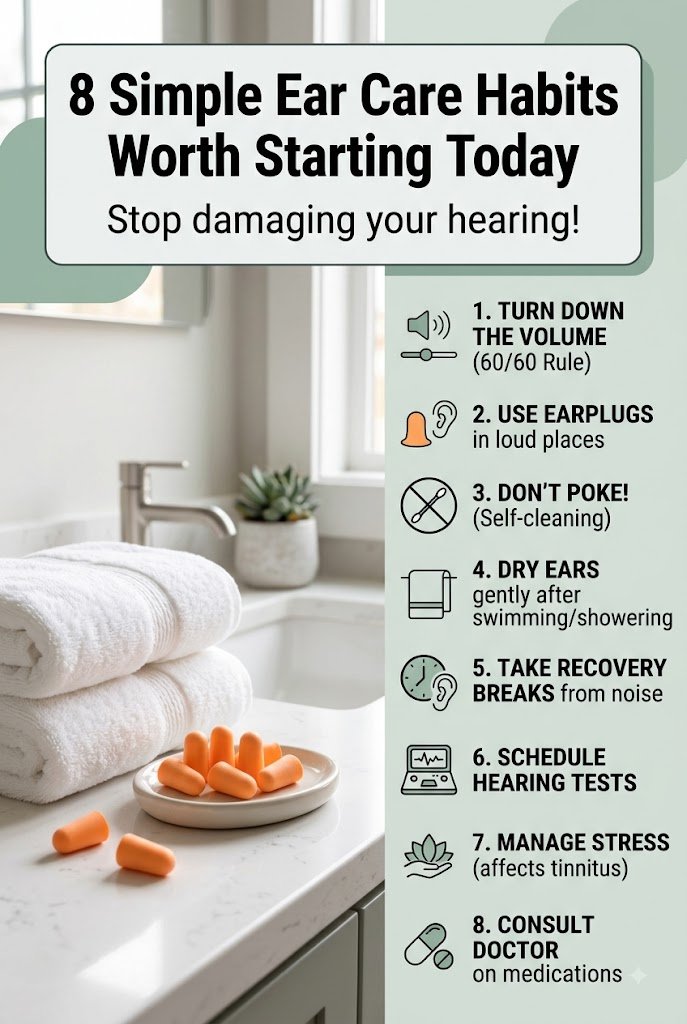
Which Ear Care Habits Actually Protect Your Hearing?
1. Adopt the 60/60 Rule for Personal Audio
Blasting music directly into your ear canal creates intense acoustic pressure. Because earbuds sit so close to your eardrum, they easily generate harmful decibel levels. Instead of guessing your volume, rigidly follow the 60/60 rule. Keep your device volume at exactly 60 percent of the maximum level. Furthermore, listen for no more than 60 minutes before taking a complete break. This specific boundary gives your auditory nerve crucial recovery time.
2. Banish Cotton Swabs from Your Bathroom
Most people wrongly believe they need to scrub the inside of their ears. However, inserting a cotton swab actually shoves old cerumen deeper into the narrow canal. This action directly causes painful impactions and muffled hearing. So, completely stop putting anything smaller than your elbow inside your ear. Let your body naturally push the wax outward through normal jaw movements like chewing and talking.
3. Dry Your Outer Ears Thoroughly After Swimming
Trapped moisture creates the absolute perfect breeding ground for aggressive bacteria and painful fungal infections. Because the ear canal is dark and warm, water must not sit inside it. After you finish swimming or taking a shower, gently tilt your head to the side. Next, use a soft towel to wipe only the outer bowl of your ear. This simple action pulls moisture away without disrupting your natural protective barriers.

4. Carry Foam Protection to Noisy Events
You never know when you will encounter dangerously loud environments like construction zones or loud concerts. Because sound damage is completely cumulative, every loud event chips away at your hearing. Buy a small container of soft foam earplugs rated for at least a 30-decibel reduction. Keep a pair stashed in your car console and your daily bag. Wearing them actively prevents the physical breaking of your inner ear hair cells.
Even when you perfectly shield your ears from loud noises, age-related changes can still dull your hearing over time. To combat this natural decline, thousands of adults use a daily nutrient blend designed specifically to promote healthy auditory circulation. By ensuring strong blood flow reaches the deepest parts of your ear, this simple addition helps maintain sharp, crystal-clear sound processing naturally.
5. Schedule Intentional Quiet Time Every Evening
Your auditory system works tirelessly from the moment you wake up until you finally fall asleep. That’s why constant background noise from televisions and traffic causes severe auditory fatigue. To counter this, schedule exactly ten minutes of absolute silence every single evening. Turn off all electronics, close your windows, and simply sit quietly. This brief pause dramatically lowers your stress hormones and gives your overworked auditory nerve a chance to recover.
6. Chew Sugar-Free Gum During Altitude Changes
Rapid changes in air pressure during airplane flights place immense physical strain on your eardrum. Because the pressure outside your body changes faster than the pressure inside your head, your ears feel painfully blocked. To safely equalize this pressure, chew a piece of sugar-free gum during takeoff and descent. The continuous swallowing and jaw movement forces your Eustachian tube to open, providing immediate, safe relief.

7. Manage Your Blood Pressure With Daily Movement
Your inner ear relies on a massive network of tiny, delicate blood vessels to function correctly. If your blood pressure remains chronically high, these vessels suffer severe damage, leading directly to hearing loss. Therefore, keeping your cardiovascular system healthy directly impacts your ears. Take a brisk, 15-minute walk every single afternoon to help stabilize your blood pressure. This gentle movement heavily ensures rich, oxygenated blood reaches your auditory pathways.
8. Add Magnesium-Rich Foods to Your Diet
Specific minerals play a massive role in protecting your hearing from noise-induced trauma. Magnesium specifically acts as a powerful barrier, protecting your inner ear cells from free radical damage. Try adding exactly one ounce of raw pumpkin seeds or a cup of fresh spinach to your daily lunch. Consuming whole-food sources of magnesium strengthens the physical structure of your inner ear effortlessly. This nutritional approach serves as an invisible shield for your auditory system.
When persistent ringing or frustrating buzzing starts interrupting your quiet moments, finding natural relief becomes your top priority. Instead of simply ignoring the noise, adding a proven auditory nourishment habit to your day targets the root cause of these frustrating sounds. This gentle, consistent support helps quiet the internal ringing, allowing you to finally enjoy absolute peace again.
Common Questions About Maintaining Auditory Health
How often should I professionally clean my ears?
If you have a healthy auditory system, you will rarely need professional cleaning. Your body naturally manages cerumen production perfectly well on its own. However, if you experience sudden hearing loss, noticeable pain, or a feeling of heavy fullness, schedule a visit immediately. Never try to flush or dig out impacted wax yourself at home.
Are noise-canceling headphones better for ear care habits?
Yes, active noise-canceling headphones provide incredible benefits for your long-term hearing. Because they actively block out background environmental noise, you do not need to crank your volume to dangerous levels to hear your music. Using them on airplanes or loud trains naturally keeps your listening volume safely within the 60/60 rule parameters.
Does diet actually impact how well I hear?
Absolutely. Your inner ear requires an incredibly steady supply of nutrients and healthy blood flow to interpret sound accurately. Diets heavily loaded with processed sugars compromise your circulation, which starves your delicate auditory nerves. Prioritizing foods rich in potassium, zinc, and magnesium keeps those tiny internal structures strong and highly responsive.
Can chronic stress cause my ears to ring?
Yes, severe daily stress acts as a massive trigger for tinnitus, which is the perception of ringing in your ears. When your body remains in a constant state of high alert, your blood pressure spikes and your nervous system becomes hyper-sensitive. Lowering your stress through intentional quiet time directly reduces the intensity of these phantom sounds.
Protect Your Sound Today
Taking care of your hearing does not require expensive treatments or complicated daily routines. Instead, simply respect the delicate nature of your auditory system. Pick just two of these ear care habits to implement this week. Start by turning down your headphone volume and throwing away your bathroom cotton swabs. When you actively protect your ears today, you guarantee a lifetime of rich, clear sound.
Pin this for later!
This article is for informational purposes only and isn’t a substitute for professional medical advice.
